Fewer visits, same fix
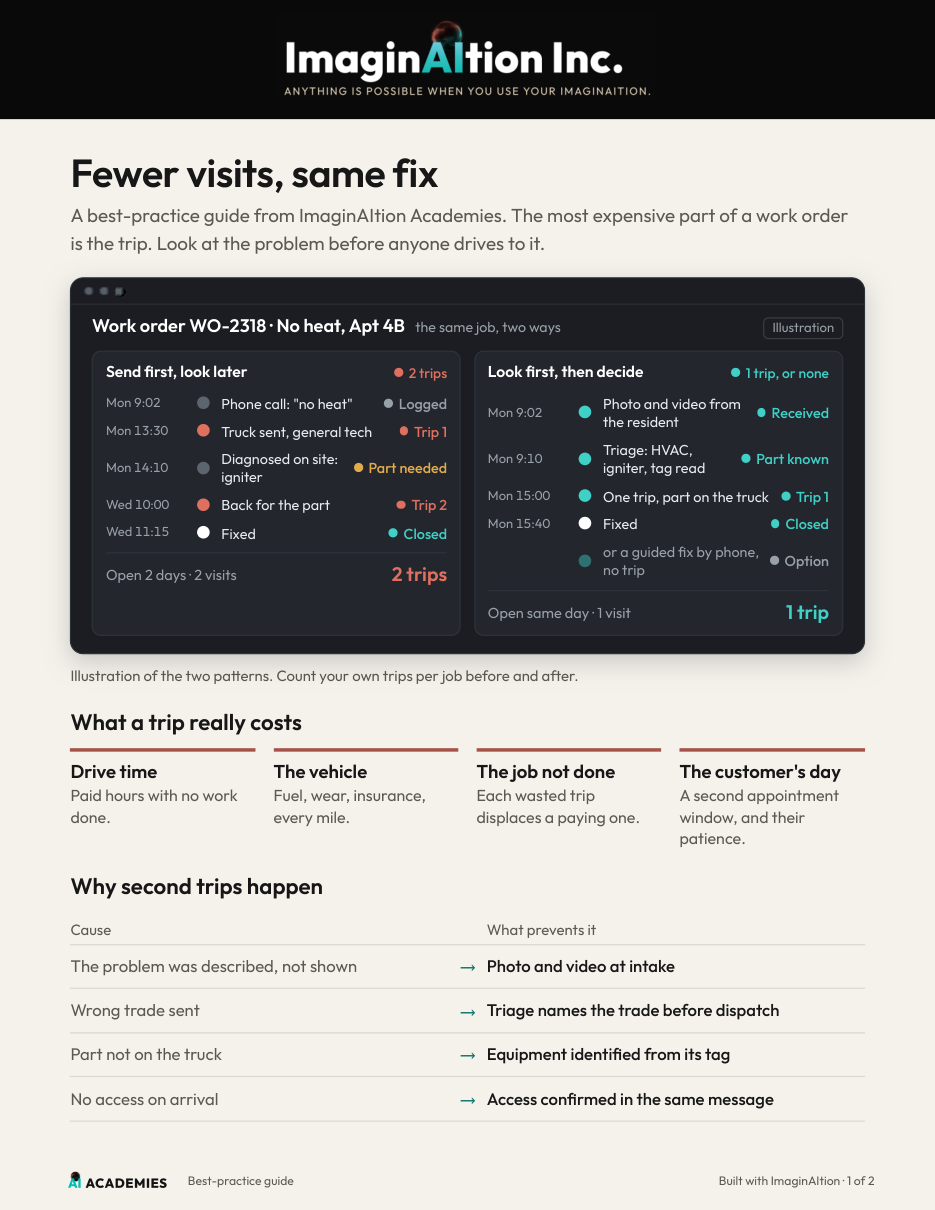
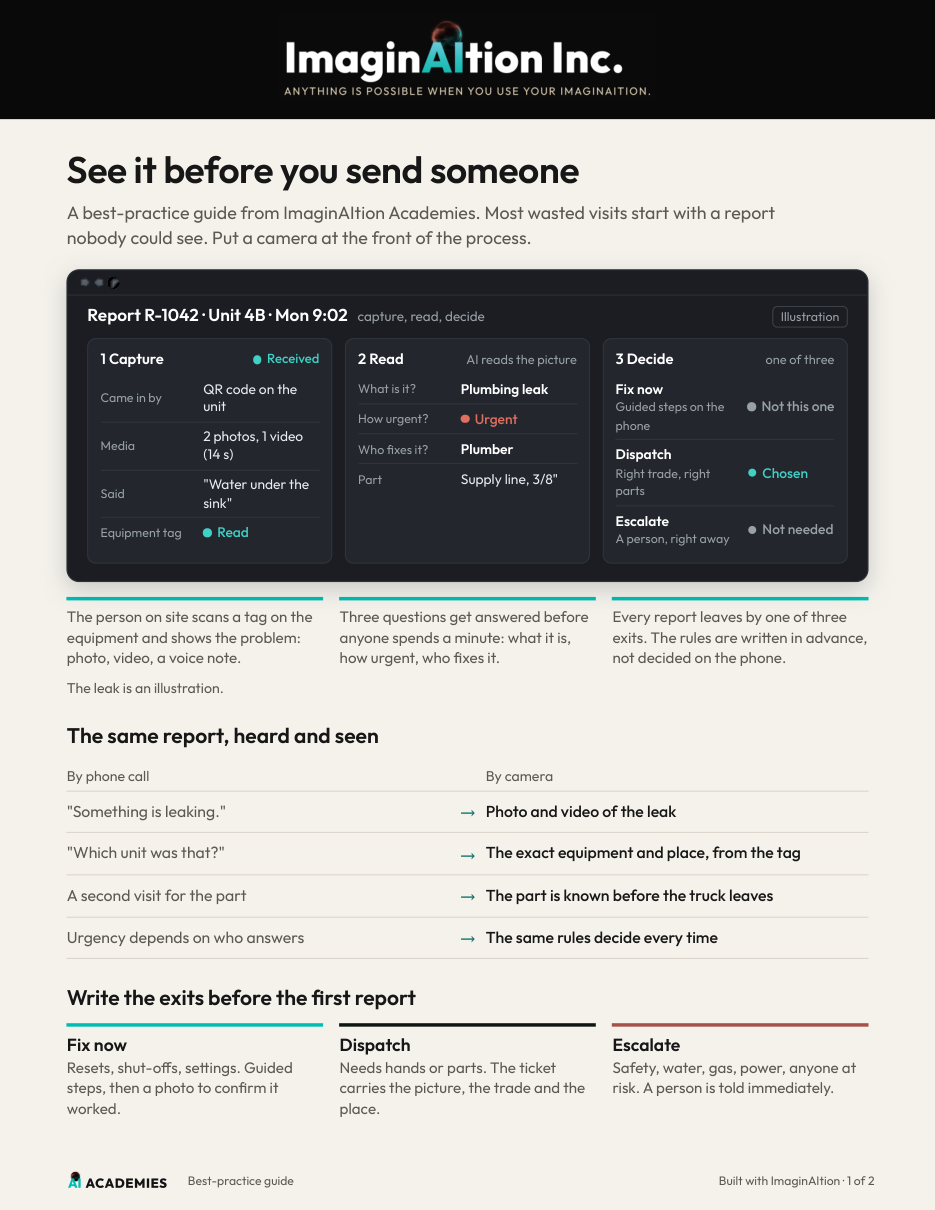
A best-practice guide from ImaginAItion Academies. The most expensive part of a work order is the trip. Look at the problem before anyone drives to it.
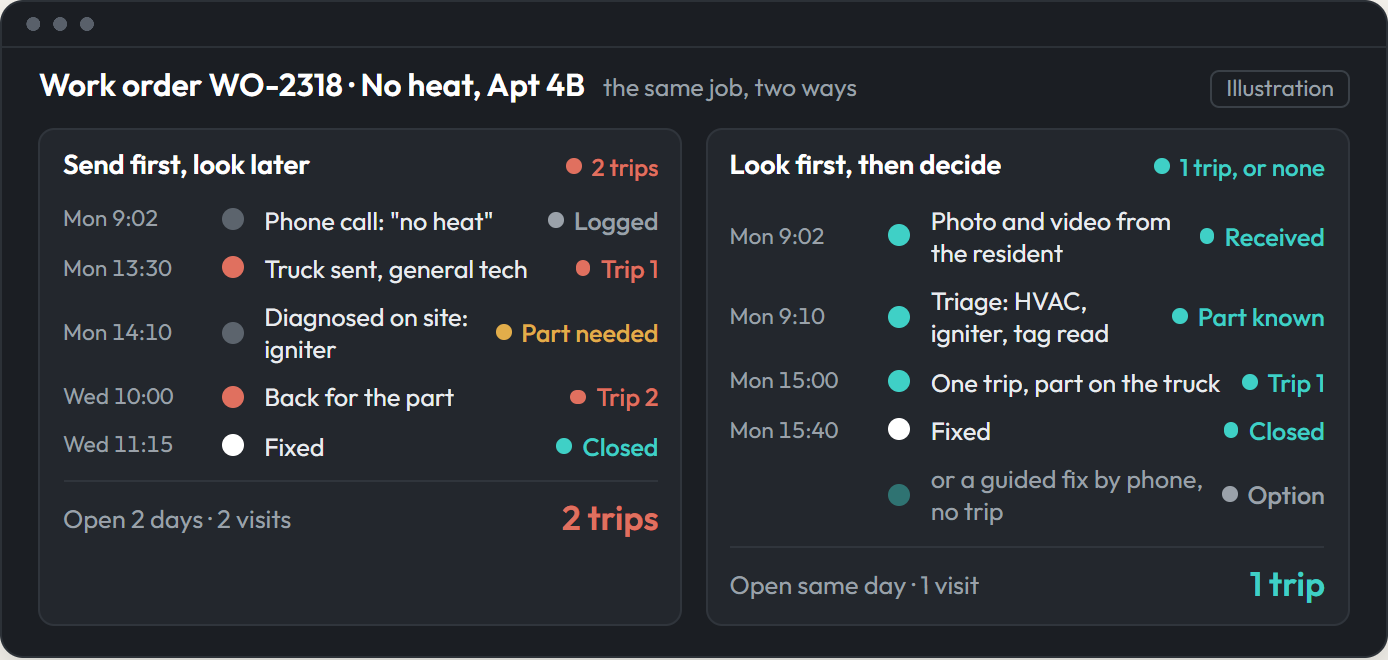
Illustration of the two patterns. Count your own trips per job before and after.
What a trip really costs
Drive timePaid hours with no work done.
The vehicleFuel, wear, insurance, every mile.
The job not doneEach wasted trip displaces a paying one.
The customer's dayA second appointment window, and their patience.
Why second trips happen
| Cause | | What prevents it |
|---|
| The problem was described, not shown | → | Photo and video at intake |
| Wrong trade sent | → | Triage names the trade before dispatch |
| Part not on the truck | → | Equipment identified from its tag |
| No access on arrival | → | Access confirmed in the same message |
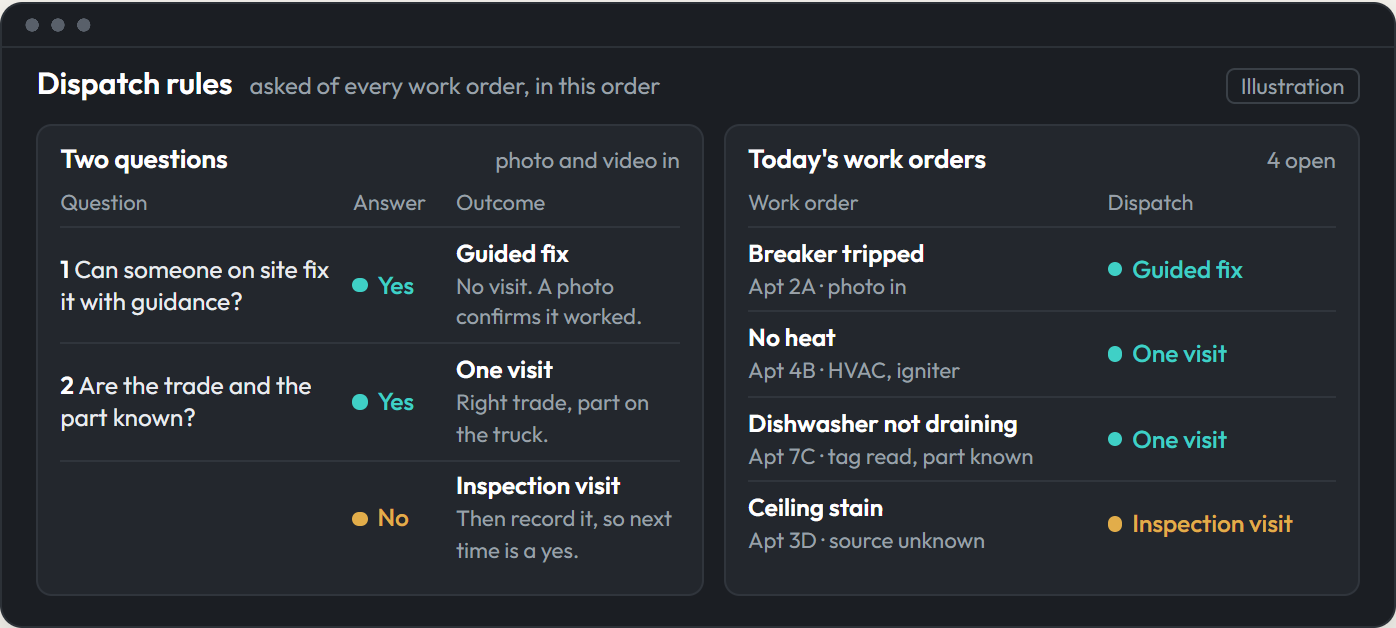
Two questions before any truck rolls
Dispatch is a decision, not a reflex. Ask the same two questions of every work order, in the same order.
Six numbers for the operations review
First-time fix rateJobs closed on the first visit ÷ jobs that needed a visit.
Visits per jobAll trips ÷ all jobs closed. The one number to drive down.
Triaged before dispatchShare of work orders someone saw before a truck was assigned.
Part on the truckVisits where the needed part arrived with the technician.
Time to resolveReport to fixed, on the customer's clock, not yours.
Cost per resolved jobLabor, travel and parts ÷ jobs closed.
Start small
One job typePick the type with the most second trips.
Thirty daysPhoto first on every one of them. Count trips.
Then widenKeep what cut trips. Add the next job type.
About this guide it teaches the method. Work orders and dispatch are on the ImaginAItion roadmap and are not a product claim here. AI Vision is our camera-first intake.