Stock that doesn't sit
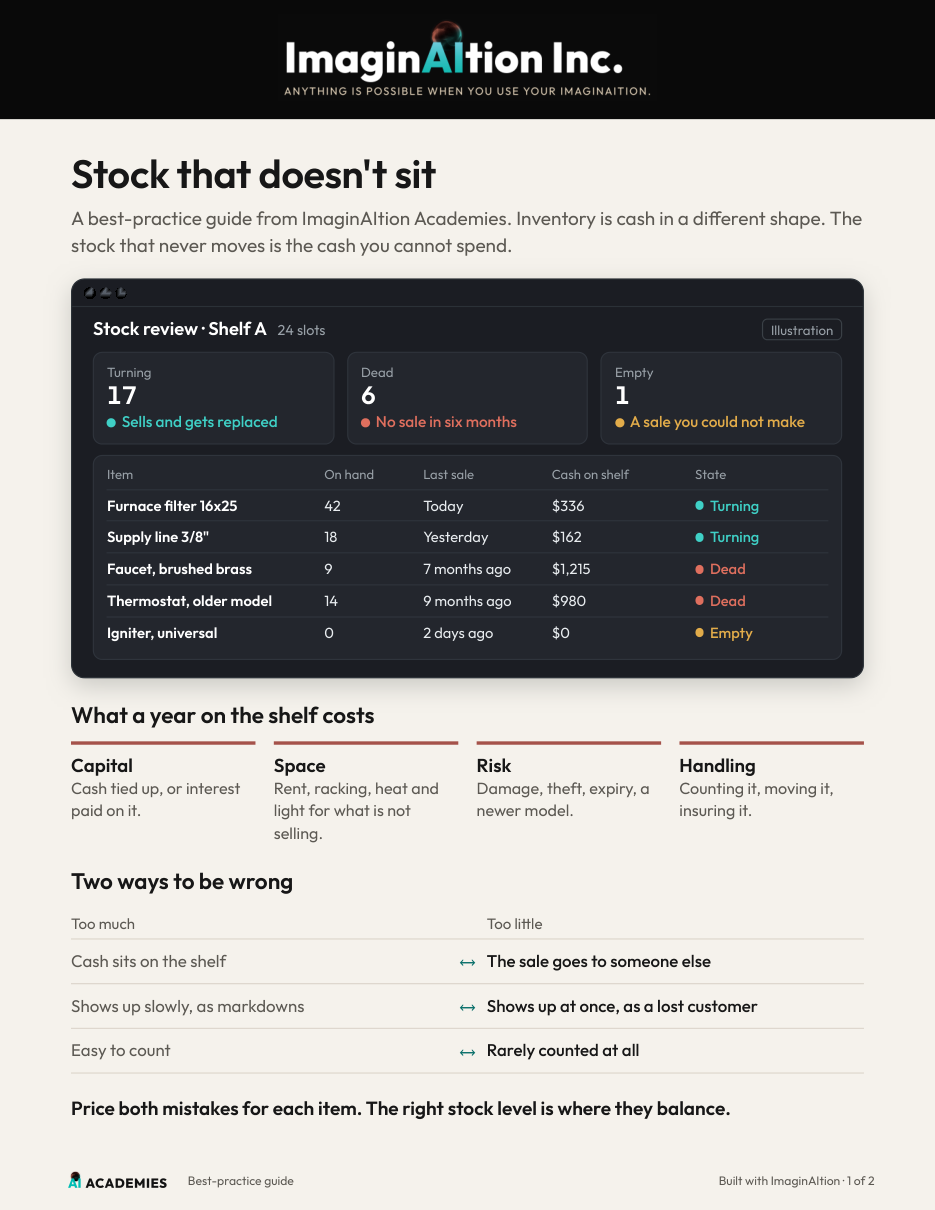
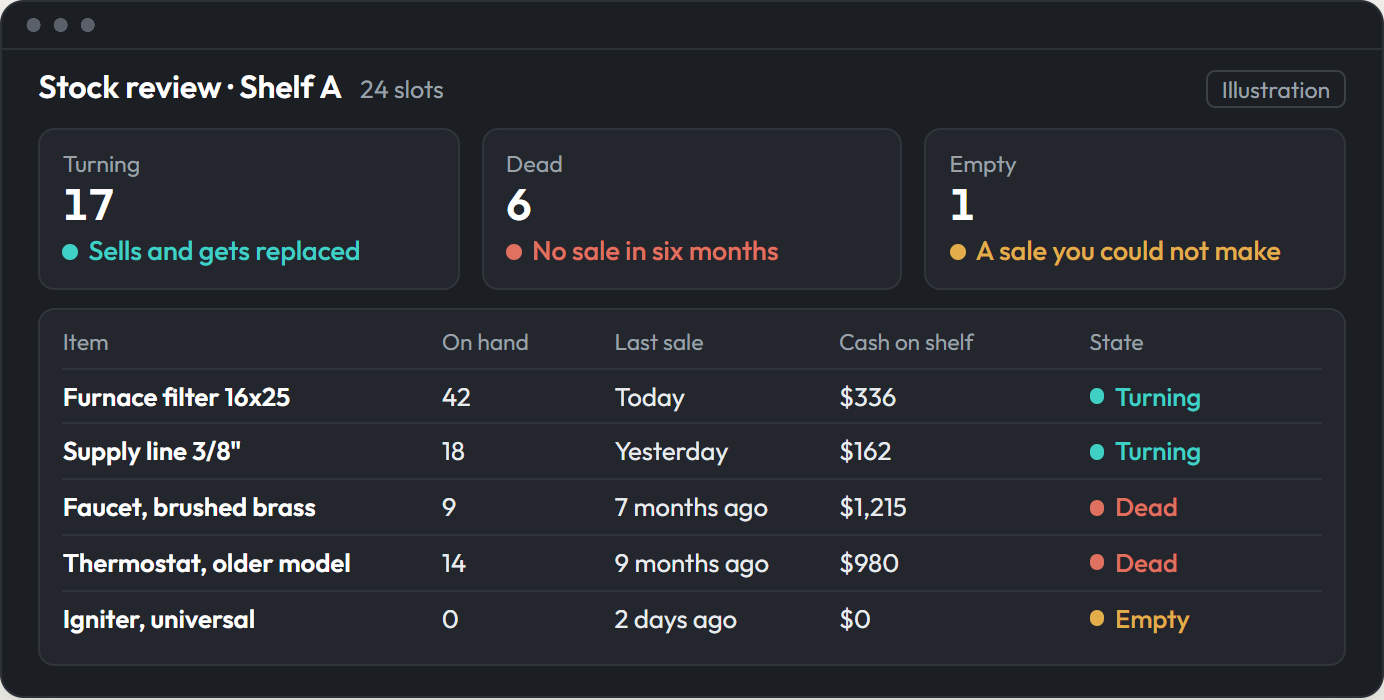
A best-practice guide from ImaginAItion Academies. Inventory is cash in a different shape. The stock that never moves is the cash you cannot spend.
What a year on the shelf costs
CapitalCash tied up, or interest paid on it.
SpaceRent, racking, heat and light for what is not selling.
RiskDamage, theft, expiry, a newer model.
HandlingCounting it, moving it, insuring it.
Two ways to be wrong
| Too much | | Too little |
|---|
| Cash sits on the shelf | ↔ | The sale goes to someone else |
| Shows up slowly, as markdowns | ↔ | Shows up at once, as a lost customer |
| Easy to count | ↔ | Rarely counted at all |
Price both mistakes for each item. The right stock level is where they balance.
Reorder on a rule, not a feeling
Every item gets three lines: a maximum, a reorder point and a safety stock. Demand and lead time set them. The order then places itself.
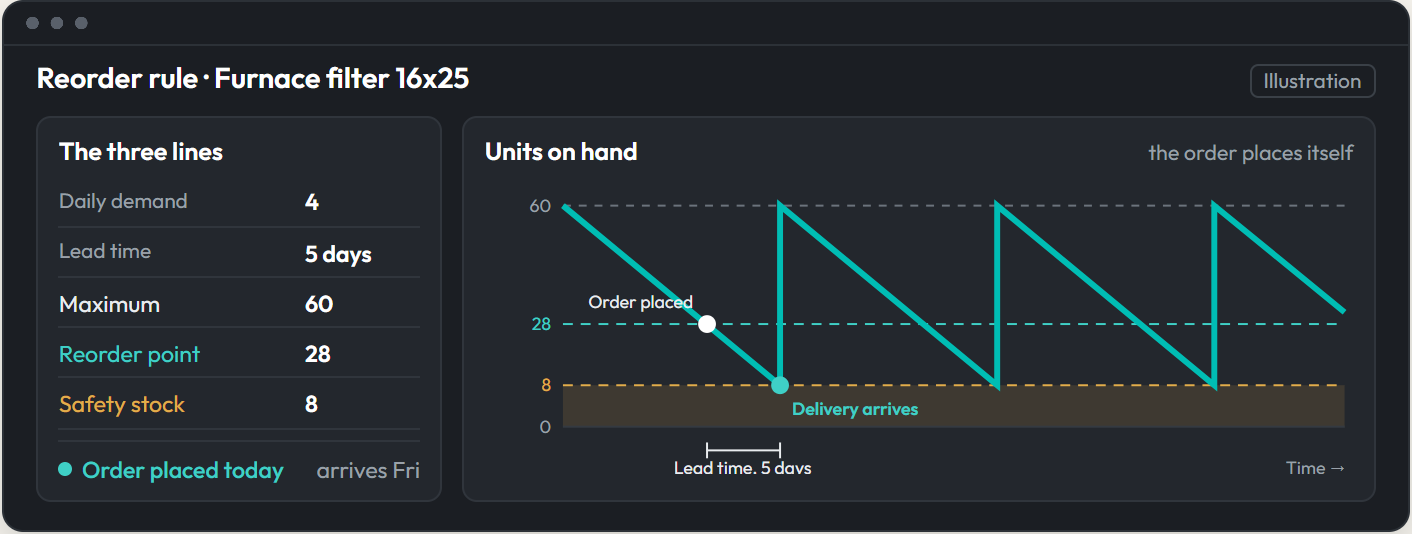
Reorder pointDaily demand × lead time in days, plus safety stock.
Safety stockEnough to cover your worst normal week and a late delivery.
MaximumReorder point plus one economical order.
Six numbers for the stock review
TurnsCost of goods sold ÷ average inventory. How many times a year the shelf empties.
Days on hand365 ÷ turns. By item, not just in total.
Carrying costCapital, space, risk and handling as a share of inventory value.
Stockout rateOrders you could not fill ÷ orders received.
Dead stock shareValue with no sale in six months ÷ total inventory value.
Forecast accuracyWhat you expected to sell against what sold, by item.
Clear the dead stock once, then keep it clear
List itEvery item with no sale in six months, by value.
Decide itDiscount, bundle, return to the supplier or write off. Put a date on each.
Stop the refillTurn off reordering on anything that made the list.
About this guide it teaches the method. An inventory module is on the ImaginAItion roadmap and is not a product claim here.