The foundation's second ledger
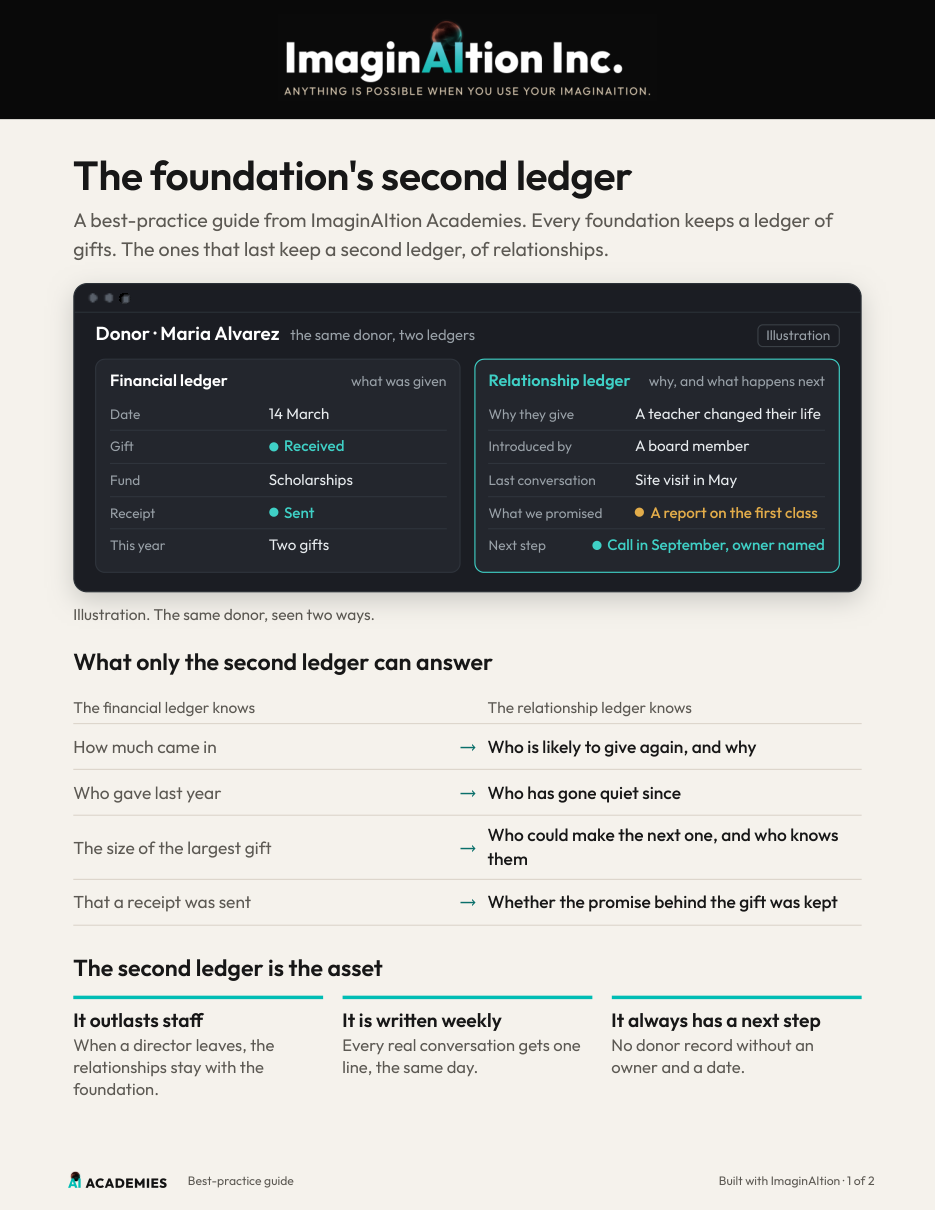
A best-practice guide from ImaginAItion Academies. Every foundation keeps a ledger of gifts. The ones that last keep a second ledger, of relationships.
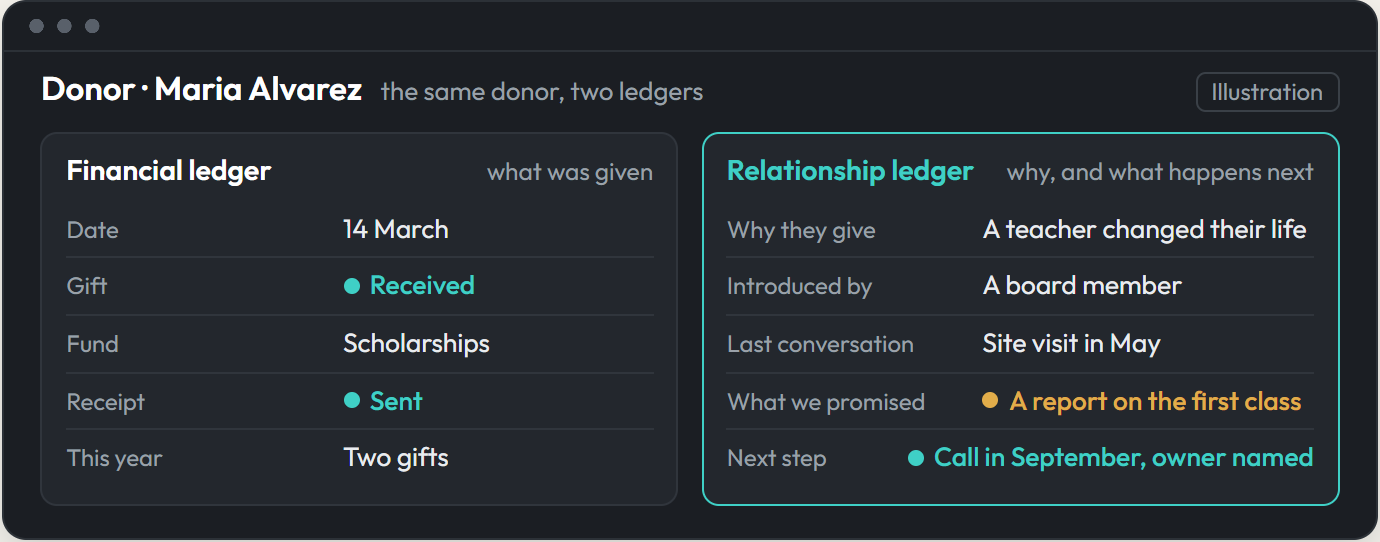
Illustration. The same donor, seen two ways.
What only the second ledger can answer
| The financial ledger knows | | The relationship ledger knows |
|---|
| How much came in | → | Who is likely to give again, and why |
| Who gave last year | → | Who has gone quiet since |
| The size of the largest gift | → | Who could make the next one, and who knows them |
| That a receipt was sent | → | Whether the promise behind the gift was kept |
The second ledger is the asset
It outlasts staffWhen a director leaves, the relationships stay with the foundation.
It is written weeklyEvery real conversation gets one line, the same day.
It always has a next stepNo donor record without an owner and a date.
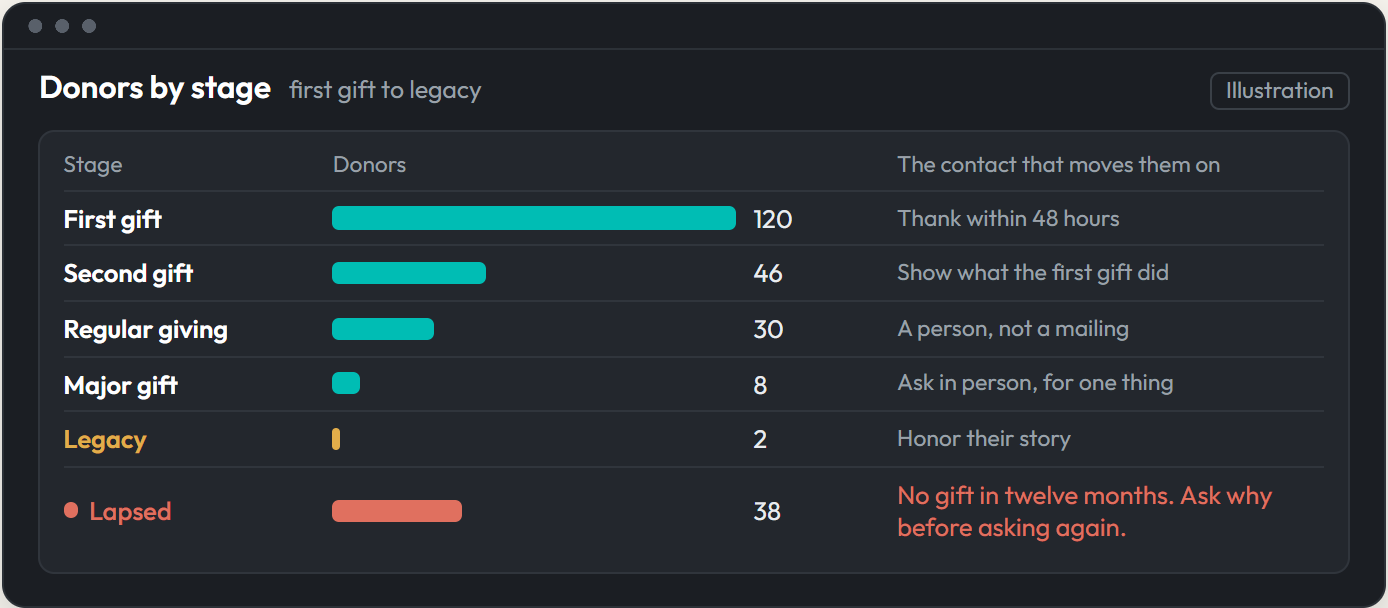
From first gift to legacy
A donor's giving follows an arc. Each step up is earned by one kind of contact, done on time.
Six numbers for the board
Donor retentionDonors who gave again this year ÷ donors who gave last year.
Second-gift rateFirst-time donors who give a second time within twelve months.
Gift frequencyGifts per donor per year. Monthly givers are counted apart.
Lapsed and won backDonors gone twelve months, and how many returned after a call.
Stewardship keptPromised reports, visits and thank-yous delivered on time ÷ promised.
Major-gift pipelineNamed prospects by stage, each with an owner and a next step.
A stewardship rhythm you can keep
48 hoursA personal thank-you for every gift.
90 daysOne story of what the gift did.
Twice a yearA real conversation, with no ask in it.
Once a yearThe ask, specific and in person where it matters.
A common rhythm, offered as a starting point. Set your own and measure whether you keep it.
About this guide it is best practice only. ImaginAItion does not offer a donor management product today. If your foundation wants one built around its second ledger, that is the conversation to start.